Personal Reading Lists Show How We Learn to Manage Attention
A personal reading list is more than a set of titles: see how its format shapes memory, taste and the way readers choose what deserves attention.
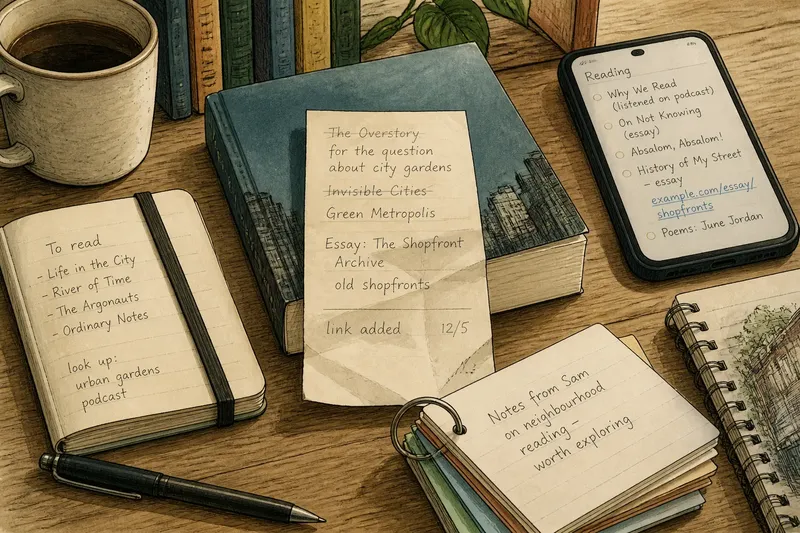
A folded library slip falls from a paperback, its pencilled titles crossed out and replaced as plans change. A personal reading list can begin with just such a note: a record of what caught someone’s attention, and a small claim on what they might return to. Its changing forms reveal a cultural shift in how readers manage curiosity, memory and the pressure to keep up.
Rather than treating the list as a private filing system, it helps to see it as a meeting point between personal intention and the tools available. A notebook, a shared shelf on a reading platform and a phone’s saved links do not invite quite the same relationship to reading. Each makes some choices easier to remember, while nudging others out of sight.
A reading list turns fleeting interest into something durable
A title mentioned in conversation can disappear from memory before the evening is over. Writing it down changes the encounter: the recommendation becomes something a reader can revisit, question or quietly abandon. The note may include the title, but also the reason it mattered—a friend’s enthusiasm, a question about a neighbourhood, or an argument worth examining.
That reason is often more revealing than a neat inventory. A list with “for the question about city gardens” beside a book records an active curiosity; a bare title records only that the item passed through someone’s view. In this way, the list is less a portrait of fixed taste than a trace of attention as it moves.
The distinction matters in a culture crowded with recommendations. A saved item can feel like progress, although no reading has begun. The list makes that gap visible: it holds possibility, not proof of commitment.
Paper and digital formats make different kinds of attention visible
A pocket notebook travels with its owner and invites handwriting, arrows and marginal comments. An index card can be moved beside another card, while a note in a diary can preserve the moment that prompted a title. These formats make entries tangible, but they can be harder to search or share.
Digital notes and reading platforms make links easy to keep, find and pass along. They also place saved titles beside notifications, work reminders and other streams of information. The medium is not simply a container; it shapes what a reader notices and how easily an old interest returns.
Think of the list as a shelf in a kitchen. What sits at eye level is easier to remember than what has been pushed to the back. A screen or notebook works similarly: its arrangement influences what comes to mind when it is time to choose.
Public reading lists turn taste into a social signal
A private list can be a place to admit uncertain interests: a subject someone has only just encountered, or a book they may never finish. Once a list is shared, it can also become a way to recommend, connect and present oneself. A public shelf may help readers find common ground, but it can encourage them to select titles that signal expertise or belonging.
This does not make public lists false or private ones pure. A notebook can be kept with an imagined audience in mind; a digital list can be nothing more than a practical reminder. What changes is the possibility of being seen, and with it the meanings attached to selection.
Lists also leave things out. A recommendation remembered without being recorded, an impulsive library choice or a title someone feels awkward displaying may never appear. What a list shows is not a complete measure of taste, but a record shaped by circumstance, access and the reader’s sense of what is worth saving.
How should a personal reading list change as habits change?
Should a personal reading list include books already read?
Include finished books if you want a record of what you have read or a place to keep notes. If that makes the list of future choices harder to scan, move completed titles to a separate section.
Are paper reading lists better than digital lists?
Paper suits readers who want a visible, handwritten record, while digital notes make links and searching easier. Choose the format that brings saved titles back into view; if neither does, try a simpler arrangement or a different home.
How can a reading list stay useful without becoming a chore?
Keep the details that help you recognise an entry, such as its title, source and a brief reason for saving it. If a list feels crowded, remove items that no longer interest you rather than adding more categories.
Can a reading list include essays and other short texts?
Yes. Add poems, interviews, articles or chapters if they are what you hope to revisit, and include a publication or link when it will help you find the piece again.
A personal reading list can hold changing intentions
Imagine that Mara hears about an essay on the history of her street while talking with a neighbour. She writes its title on a paper slip and adds “old shopfronts” as the reason; later, when she receives a link to the essay in a message, she adds the link to the same note rather than trying to catalogue every recommendation. The resulting entry connects the piece to the conversation and gives her a way to find it, while leaving her free to change her mind.
That modest act captures what a personal reading list can do: preserve a thread of curiosity without turning it into a debt. As reading moves between paper, platforms and conversation, the useful question is not whether a list is complete, but whether it helps a reader recognise why a title once mattered and decide what deserves attention now.