The Progress Story Is Not the Only Way to Describe Change
The progress story can make change sound automatically better. Learn to describe what changed, trace its effects and choose language that fits what you know.
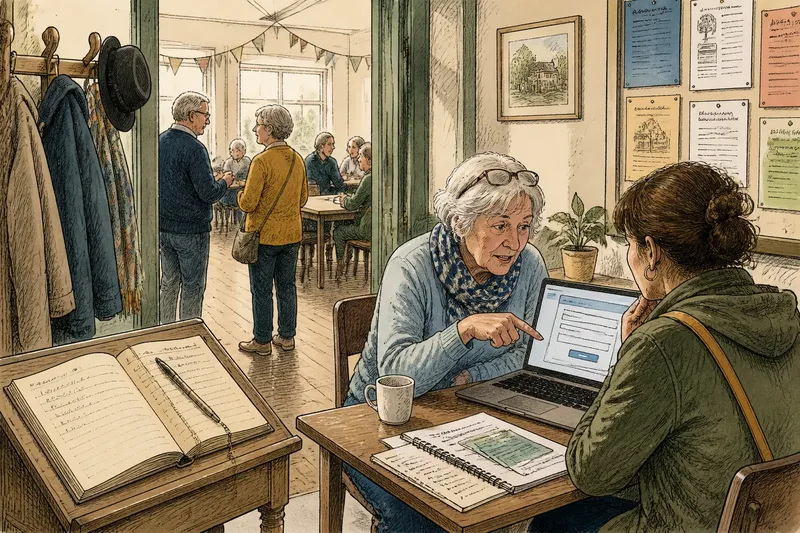
At the community hall, a new booking system replaces the paper diary by the entrance. The progress story arrives with it: fewer phone calls, smoother evenings, a step forward. But one volunteer now spends lunch helping neighbours use the form, and the phrase “step forward” does not tell us what the change has done.
Change can be described without turning it into a race towards a better future. The useful question is not simply whether things moved on, but what people can now do, what has become difficult, and what remains uncertain.
Describe the change without borrowing its publicity
Begin with a plain account of the event: “The hall replaced its paper booking diary with an online form.” Words such as “modern”, “outdated” and “finally” add a verdict before the effects are clear.
Then say what the change was meant to do, keeping intention separate from result. “The form was introduced to reduce phone calls” describes a purpose; it does not establish that calls fell or that booking became easier.
A useful description can keep three details distinct:
- What happened: The booking method changed from a paper diary to an online form.
- What people now do: Some book online; others ask a volunteer for help.
- What is still unclear: Whether the new arrangement has made booking easier overall.
Think of a coat rack by the door: adding a hook changes where a coat can hang, but not whether the hallway is easier to use. The new feature is visible; its effect depends on how people live with it.
Follow the effects instead of the timeline
A timeline tells you that one arrangement came after another. It cannot tell you what happened to people’s routines. Look for changes in ordinary actions: who can book without assistance, who has to make an extra trip, and which tasks now fall to staff or volunteers.
Say a neighbourhood library moves reservations from a desk notebook to an online portal. Imagine one resident, who finishes work after the library closes, can now reserve a book from home; another shares a phone and asks a librarian to place the reservation. The observable result is that the first resident can act independently after hours, while the second still depends on in-person help—not a single, universal change in access.
That account does not settle whether the portal is a worthwhile change. It gives the discussion something more useful than “new is better” or “the old way was better”: a specific description of what each person can and cannot do.
Notice the assumptions hidden in a progress story
Stories of progress often imply that one kind of change matters most: faster service, wider choice, less effort, or greater independence. Those aims can be valuable, but they are not interchangeable. A service may become quicker for people who use it online while feeling less welcoming to someone who needs a conversation.
Listen for what the story treats as a problem and what it leaves out. If a report celebrates fewer phone calls, ask whether callers were served online, gave up, or found another route. The point is not to distrust every claim, but to notice the parts of everyday life that its chosen description leaves in the background.
It can also help to ask who gets to name the change. The person who designed a service, the person who maintains it and the person who relies on it may describe the same event in different terms. Their accounts can sit side by side without being forced into one slogan.
How can you tell what a change means?
Does a later arrangement count as progress?
Not by sequence alone. “Later” tells you when something happened, while “progress” says that some valued condition has improved; the second claim needs an account of what changed in practice.
Can a new system help without working for everyone?
Yes. It may let some people complete a task independently while leaving others dependent on assistance. Describe those different experiences rather than presenting one as the whole story.
What if the promised benefit has not appeared?
Separate the stated aim from the outcome people can observe. If the promised benefit is not yet visible, say that it remains unconfirmed rather than treating the intention as proof of success.
How should you describe mixed effects?
Name the specific change in routine, the people it affects and the parts that are still unclear. That gives readers room to judge the trade-offs without hiding them behind a single label.
Choose words that leave room for what you do not know
Before repeating a progress story, check what it rests on. The following prompts help keep a description concrete; each result points to a different way of telling the story.
- Check the starting point: If you can name the earlier arrangement, describe the shift from it; if you cannot, say that the comparison is unclear rather than claiming improvement.
- Check the promised purpose: If the change was meant to make a task easier, state that as an aim; if the purpose is unknown, avoid assigning one.
- Check the observable routine: If people now complete a task differently, describe that action; if you have no account of what they do, present the effect as unknown.
- Check who needs help: If some people rely on assistance, include that dependence; if no such account is available, do not claim that everyone acts independently.
- Check what became harder: If a new burden is apparent, name the task and who carries it; if no burden is known, leave the question open rather than declaring there is none.
- Check whether effects are settled: If accounts differ or the change is still unfolding, say so; if the effects are clear in the account you have, describe them without stretching beyond it.
For the hall, the starting point is a paper diary, the new action is online booking, and the intended benefit is fewer calls. The volunteer’s lunch-time help is a visible added task, while the available account does not establish whether calls have fallen or whether all neighbours can book independently. A careful description would say that the booking method changed, some neighbours need help, and the broader effect remains unclear—not that the hall has unquestionably moved forward.
The progress story is one possible way to describe change, not a neutral caption for whatever comes next. When you use the phrase, let it follow the effects you can actually describe; if those effects are mixed or still unfolding, say that plainly. That small choice leaves room for people whose experience does not fit the headline.